

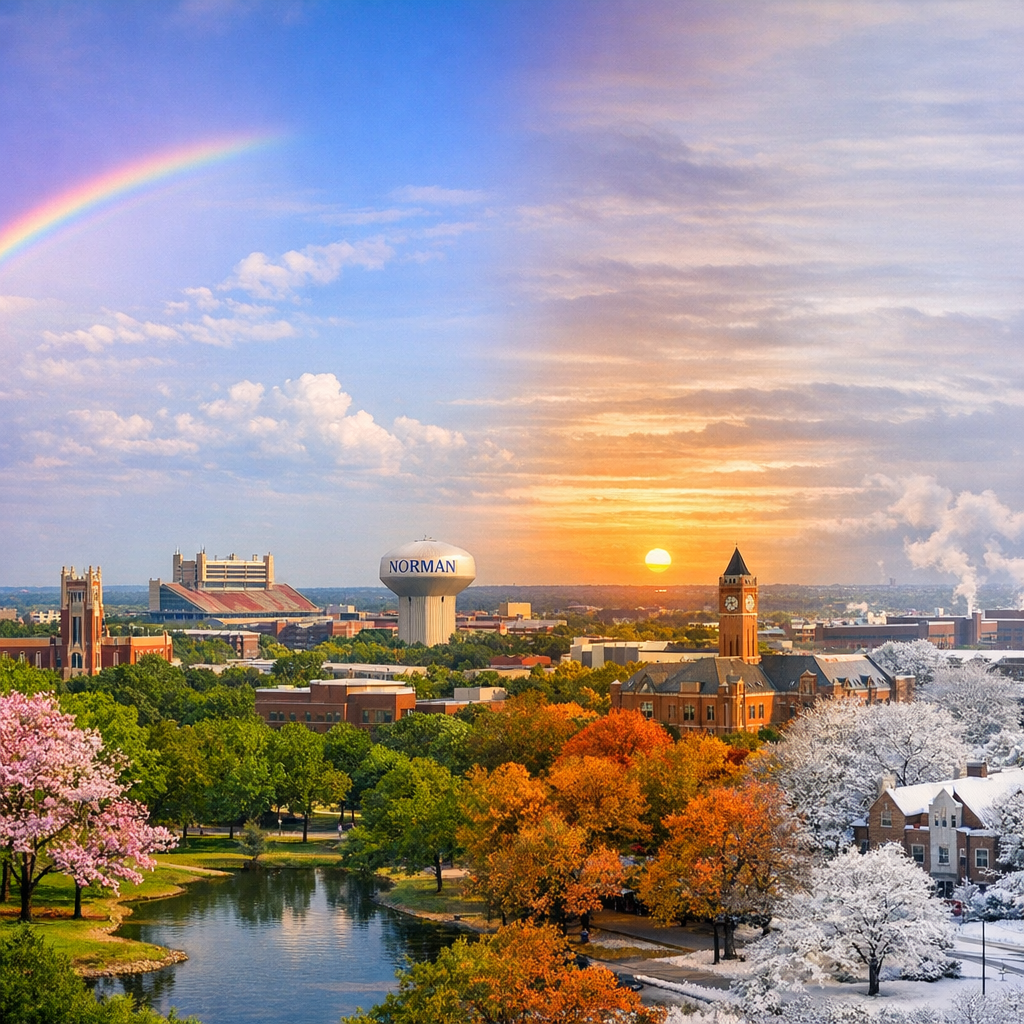
Norman, Oklahoma, experiences a humid subtropical climate characterized by hot, humid summers and cold, windy winters. Understanding these patterns is essential for residents and visitors alike.
Seasonal Weather Patterns
Spring
Spring in Norman brings warming temperatures and increased precipitation. Average daytime highs range from 63°F (17.2°C) in April to 88.3°F (31.3°C) in June. This season is also marked by heightened storm activity, including the potential for severe weather events.
Summer
Summers are typically hot and humid, with average highs peaking at 94°F (34°C) in July. The season is mostly clear, providing ample sunshine for outdoor activities. However, residents should remain vigilant for occasional heatwaves and thunderstorms.
Fall
Autumn sees a gradual cooling, with temperatures dropping from the highs of summer to more comfortable levels. This period offers a respite from the intense heat and is often accompanied by clear skies and reduced rainfall.
Winter
Winters are cold and windy, with average highs around 49°F (9.5°C) in January. Snowfall is minimal but possible, and residents should prepare for occasional cold snaps and brisk winds.
Environmental Considerations
Stormwater Management
Norman’s urban development has led to increased stormwater runoff, which can carry pollutants into local waterways. The city’s Stormwater Quality Division emphasizes the importance of managing this runoff to protect water quality. Residents are encouraged to minimize the use of pesticides and fertilizers and to properly dispose of waste to reduce pollution.
Wildlife Interactions
The city’s diverse habitats support a variety of wildlife. Seasonal changes influence animal behaviors, such as nesting in spring and foraging in fall. Homeowners should be aware of potential wildlife encounters and take steps to secure their properties, especially during periods of increased animal activity.
Climate Change Impacts
Projections indicate that Norman may experience more frequent extreme heat days and increased precipitation events in the coming decades. These changes could affect public health, infrastructure, and local ecosystems. Community initiatives aimed at sustainability and resilience are crucial in addressing these challenges.
By staying informed about Norman’s climate and environmental dynamics, residents can better prepare for seasonal changes and contribute to the city’s overall well-being.