

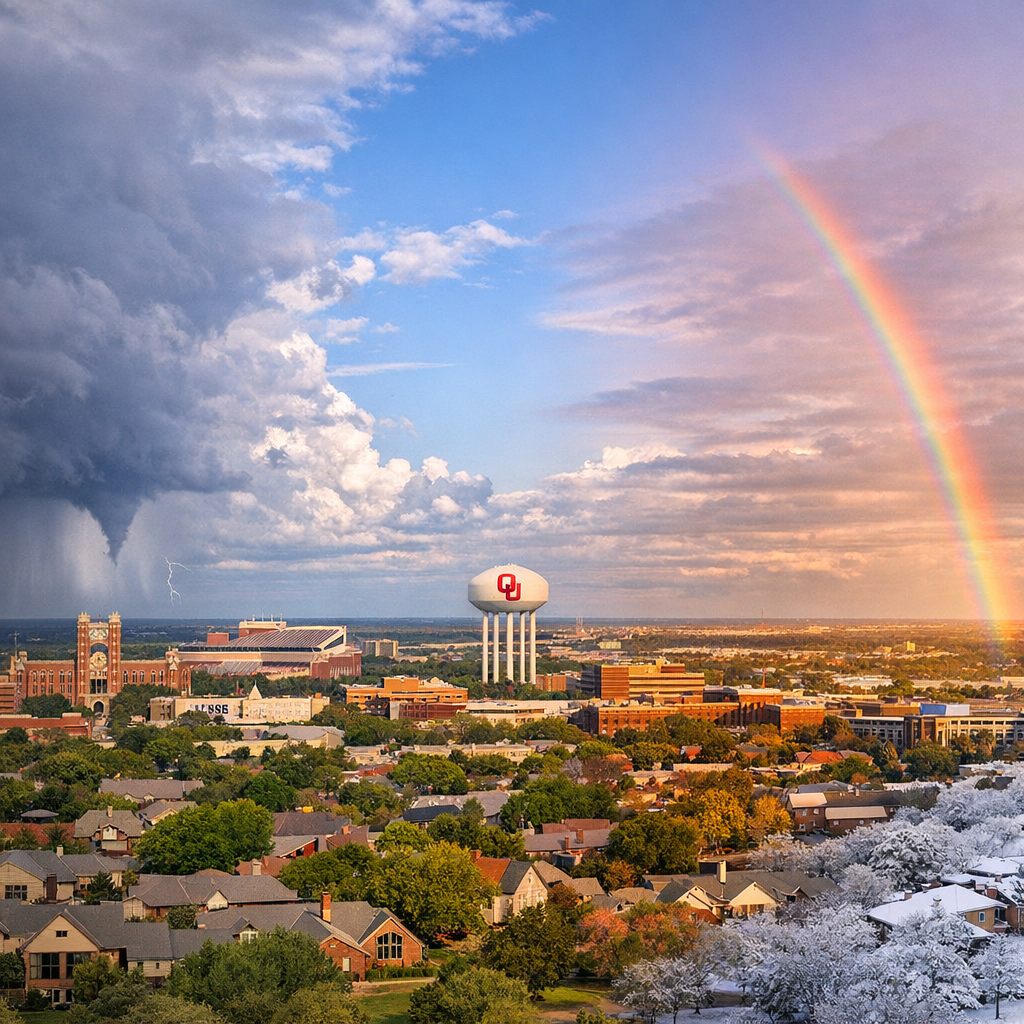
Norman, Oklahoma, experiences a humid subtropical climate characterized by hot, humid summers and mild to cool winters. Understanding these patterns can help residents prepare for seasonal changes and make informed decisions about outdoor activities and home maintenance.
Seasonal Overview
Spring (March to May)
Spring in Norman brings warming temperatures and increased rainfall. Average highs range from 63.4°F (17.4°C) in March to 79.2°F (26.2°C) in May. This season is also known for its severe weather, including thunderstorms and tornadoes, due to Norman’s location in “Tornado Alley.” Residents should stay informed about weather alerts and have a safety plan in place.
Summer (June to August)
Summers are typically hot and humid, with average highs peaking at 93.3°F (34.1°C) in July. While July and August are the warmest months, consistent southern winds help temper the heat. It’s essential to stay hydrated and limit outdoor activities during peak heat hours.
Fall (September to November)
Fall offers a gradual cooling, with average highs decreasing from 84.9°F (29.4°C) in September to 61.9°F (16.6°C) in November. This season is generally pleasant, making it ideal for outdoor activities. However, occasional storms can occur, so staying updated on weather forecasts is advisable.
Winter (December to February)
Winters are mild to cool, with average highs around 50.2°F (10.1°C) in January. Snowfall is minimal, averaging about 1.3 inches (33 mm) in February. While severe winter storms are rare, residents should be prepared for occasional cold snaps and ensure their homes are winter-ready.
Environmental Considerations
Norman’s climate influences local environmental conditions. The city receives approximately 36.34 inches (923 mm) of precipitation annually, with May and June being the wettest months. This rainfall supports local agriculture but can also lead to flooding. The City of Norman’s Stormwater Quality Division works to manage runoff and protect water quality. Residents can contribute by maintaining proper drainage on their properties and avoiding disposing of pollutants in storm drains.
Understanding Norman’s climate patterns allows residents to better prepare for seasonal changes and contribute to the community’s environmental resilience.