
By Emma Singh
Current Home Values & What Buyers Can Expect
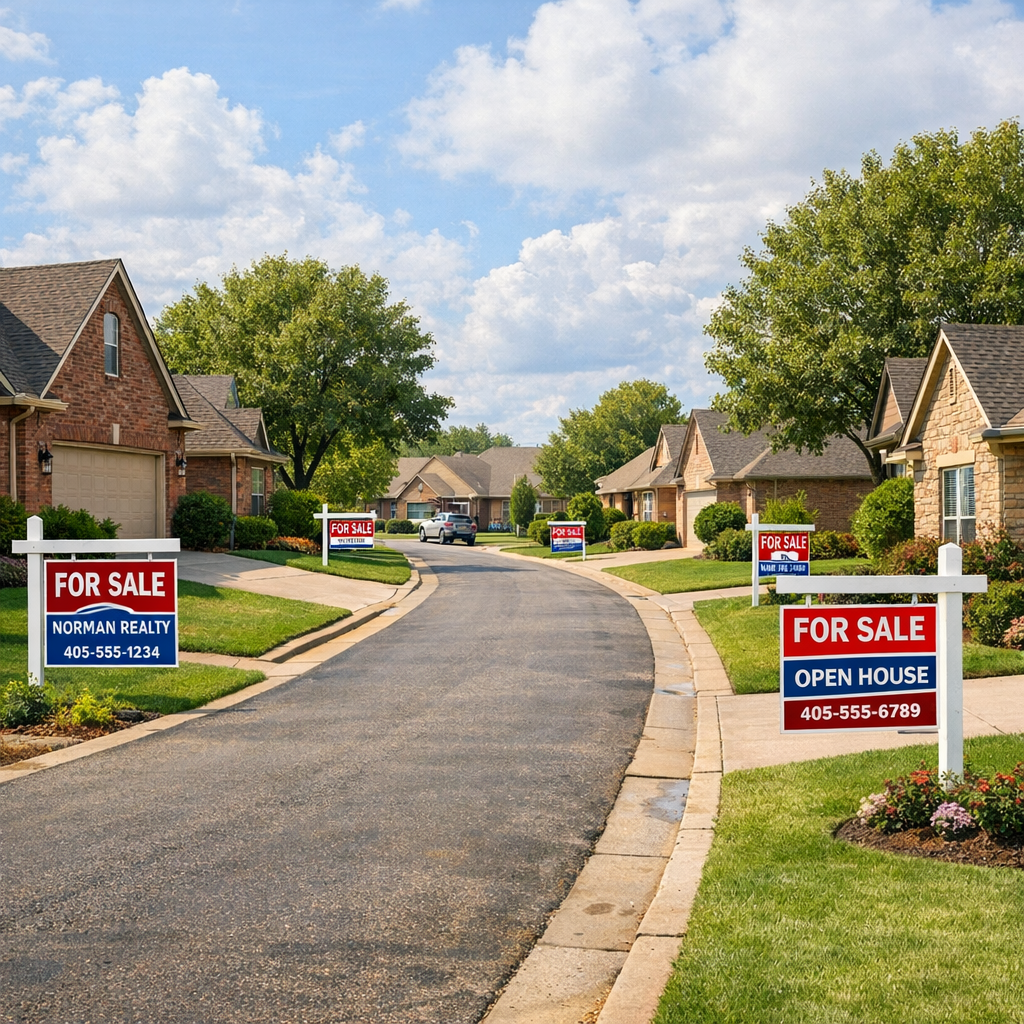
In Norman, the typical single-family home value is around $265,600, rising about 1 percent over the past year. Homes tend to go under contract in 17 to 24 days, depending on the source—indicating steady demand from buyers willing to move quickly. Median sale prices are hovering between $294,800 and $330,000 depending on the neighborhood. Certain areas, like Hall Park and Larsh-Miller, feature higher prices per square foot, reflecting strong desirability.
Rental Costs & Market Changes
Rent for Norman housing varies widely. Across all types, the average is approximately $1,400 to $1,500/month. Apartments are often cheaper—studios and one-bedrooms tend to run under $1,000—while larger homes and townhouses stretch toward and above $1,600–$1,700.
Interestingly, rental listing inventory is tightening somewhat, and year-over-year changes show rents slipping a little in certain segments while remaining flat or modestly rising in others. For many renters, affordability remains the main concern.
Housing Development & Affordability Efforts
To match the growing population and changing household needs, Norman has produced thousands of single-family homes and multifamily units since 2000. But a recent planning report identifies gaps in the “middle” housing market—townhomes, duplexes, smaller attached homes—and a shortage of housing priced for lower-income and middle-income residents.
One ongoing project of note is the construction of a four-bedroom affordable home at Leaning Elm, funded through multiple city and nonprofit programs. The effort reflects Norman’s broader commitment toward preserving and increasing affordable housing options even as home values rise.
What This Means for Locals
For prospective buyers: this is a stable market. Prices are increasing slowly, days on market remain relatively short, and there are opportunities—especially if you’re open to neighborhoods with slightly older homes or more distant from core amenities.
For renters: price sensitivity is more pronounced. One-bedrooms and smaller units may offer the best value; families looking for larger homes should be prepared for higher rents and thinner inventories.
For developers and city planners: growing demand for middle-income housing, workforce housing, and affordable single-family homes is clear. Policy tools, zoning that supports diverse housing types, and active partnerships with nonprofits will be key to meeting that demand.
Takeaway
Norman’s housing market reflects its identity: steadily growing, with sharp demand in certain segments and real challenges in affordability across the board. Whether buying, renting, or planning development, knowing where costs lie—and where gaps are—can help residents navigate what’s possible right now.