

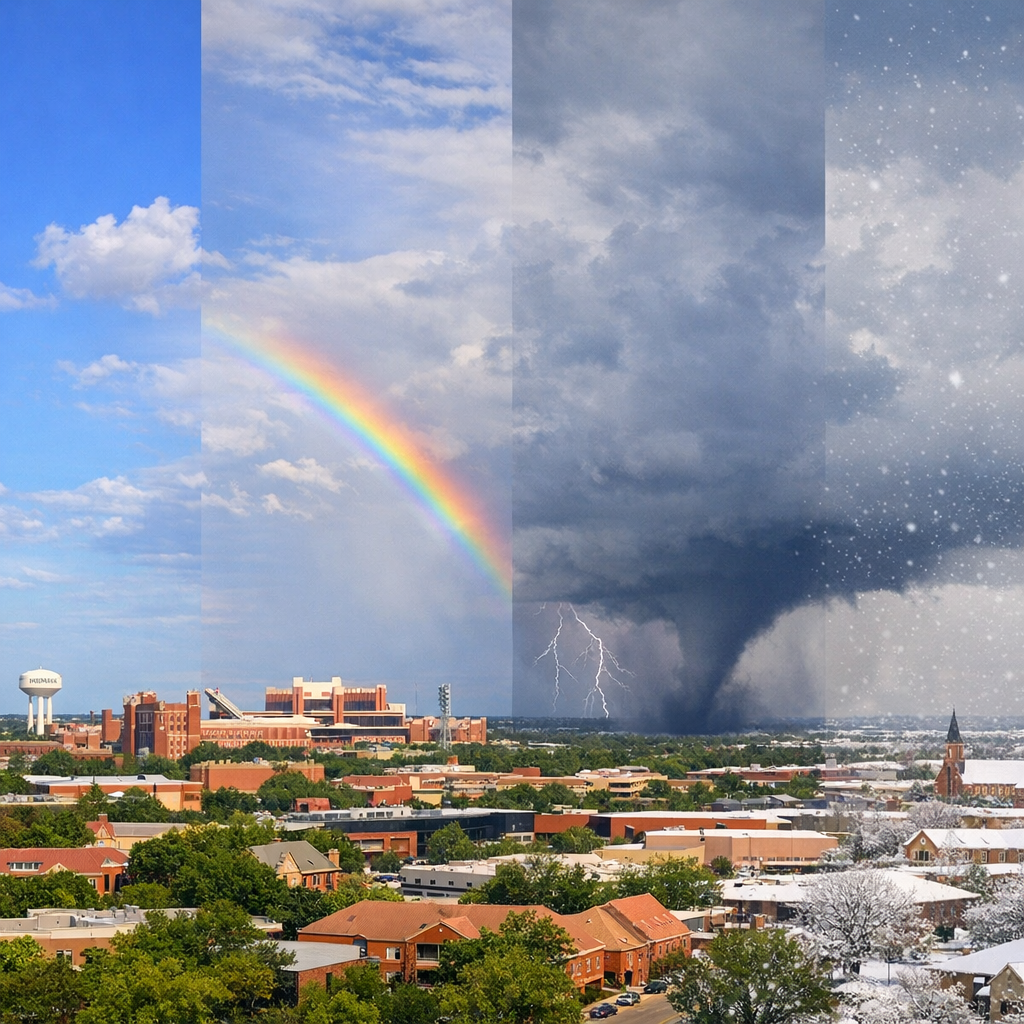
Norman, Oklahoma, experiences a humid subtropical climate characterized by hot, humid summers and cool winters. Understanding these patterns is essential for residents to prepare for seasonal changes and their environmental impacts.
Seasonal Temperature Variations
Throughout the year, temperatures in Norman fluctuate significantly. Average daytime highs range from approximately 49°F (9.5°C) in January to about 94°F (34.2°C) in July. Correspondingly, average lows vary from around 32°F (0.2°C) in January to 74°F (23°C) in July. This variation underscores the importance of seasonal preparedness for both heat and cold.
Precipitation and Storms
Norman receives an average annual precipitation of about 38 inches, with May and June being the wettest months. The city is situated within Tornado Alley, making it prone to severe weather events, including tornadoes and heavy storms, particularly in the spring and early summer months. Residents should stay informed about weather forecasts and have emergency plans in place during these periods.
Environmental Impacts
Seasonal changes influence local wildlife and vegetation. For instance, spring and summer see increased activity among raccoons, squirrels, and various bird species, especially in areas near parks and wooded neighborhoods. Additionally, heavy rains can lead to flooding, affecting both urban and natural environments. The City of Norman’s Stormwater Quality program emphasizes the importance of managing stormwater runoff to prevent pollution and protect local waterways.
Community Initiatives
To address environmental challenges, Norman has established the Division of Environmental Resilience & Sustainability (DoERS). This division focuses on protecting human health and the environment by implementing programs that reduce pollution and promote sustainability. Residents are encouraged to participate in local initiatives and stay informed about environmental issues affecting the community.
By understanding Norman’s climate patterns and their environmental impacts, residents can take proactive steps to adapt and contribute to the city’s resilience and sustainability efforts.